


The vicinity
of Farnese
from among many
Farnese, located on the border with Tuscany and not far from Umbria, can serve as a very convenient base for both short trips and longer excursions. Within roughly 150 km you can reach Rome, Assisi, such Tuscan gems as Siena and Arezzo, as well as less obvious destinations like Foligno and Spoleto in Umbria, along with the beautiful Tyrrhenian Sea beaches, lakes and nature reserves.
The selected recommended places listed below (apart from Elba and Piombino) are much closer: you can reach them within about 50 kilometres, that is, up to one hour by car. Farnese is also well connected by bus to Viterbo, from where trains and coaches depart to various Italian destinations (details can be found in the How to Get section).
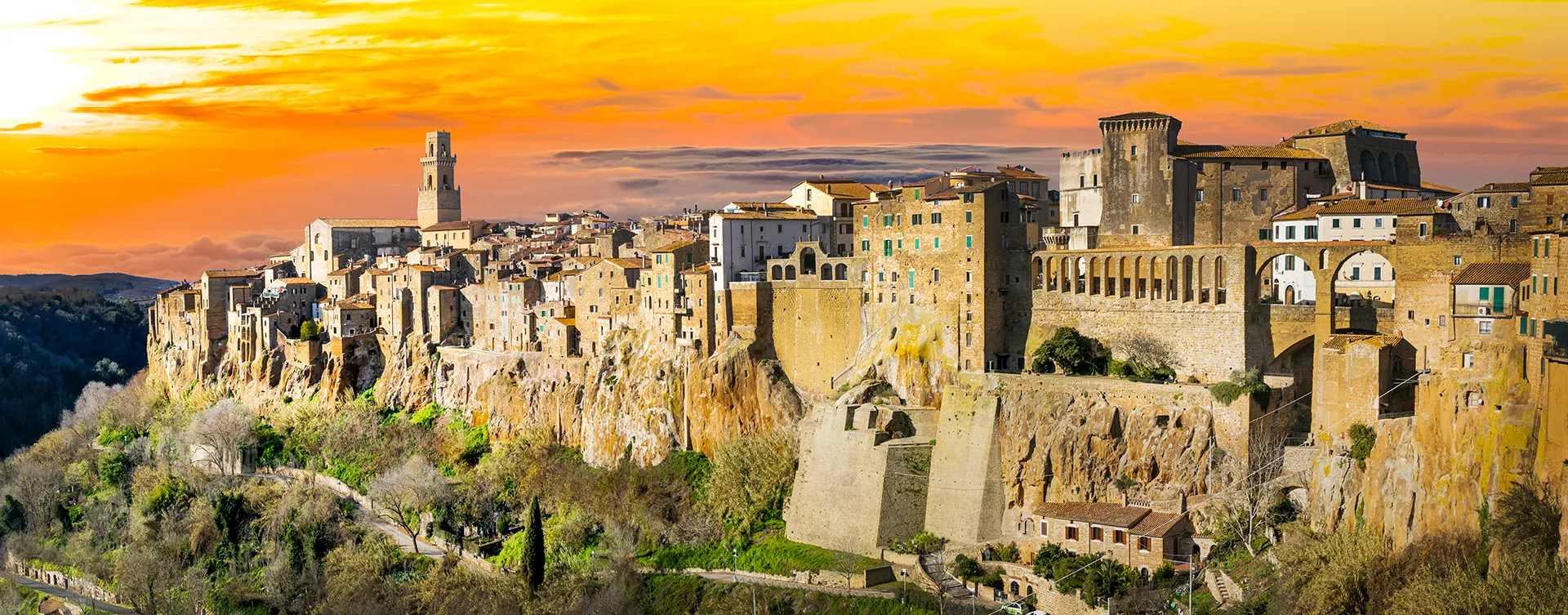
Pitigliano / 22 km
“This is one of the most picturesque towns in southern Tuscany, perched on a high tuff cliff from which its houses, walls and narrow lanes seem to grow as one with the rock. Known as the “Little Jerusalem”, it captivates visitors with its medieval historic centre, the Orsini Palace, the aqueduct and the charming Jewish quarter with its restored synagogue. Around the town stretches the unique world of the Etruscan Vie Cave carved into the rock, leading towards Sovana and Sorano, and Pitigliano’s location makes it an excellent base for exploring the Saturnia hot springs and the rolling hills of the Maremma.”
ChatGPT 5 Thinking
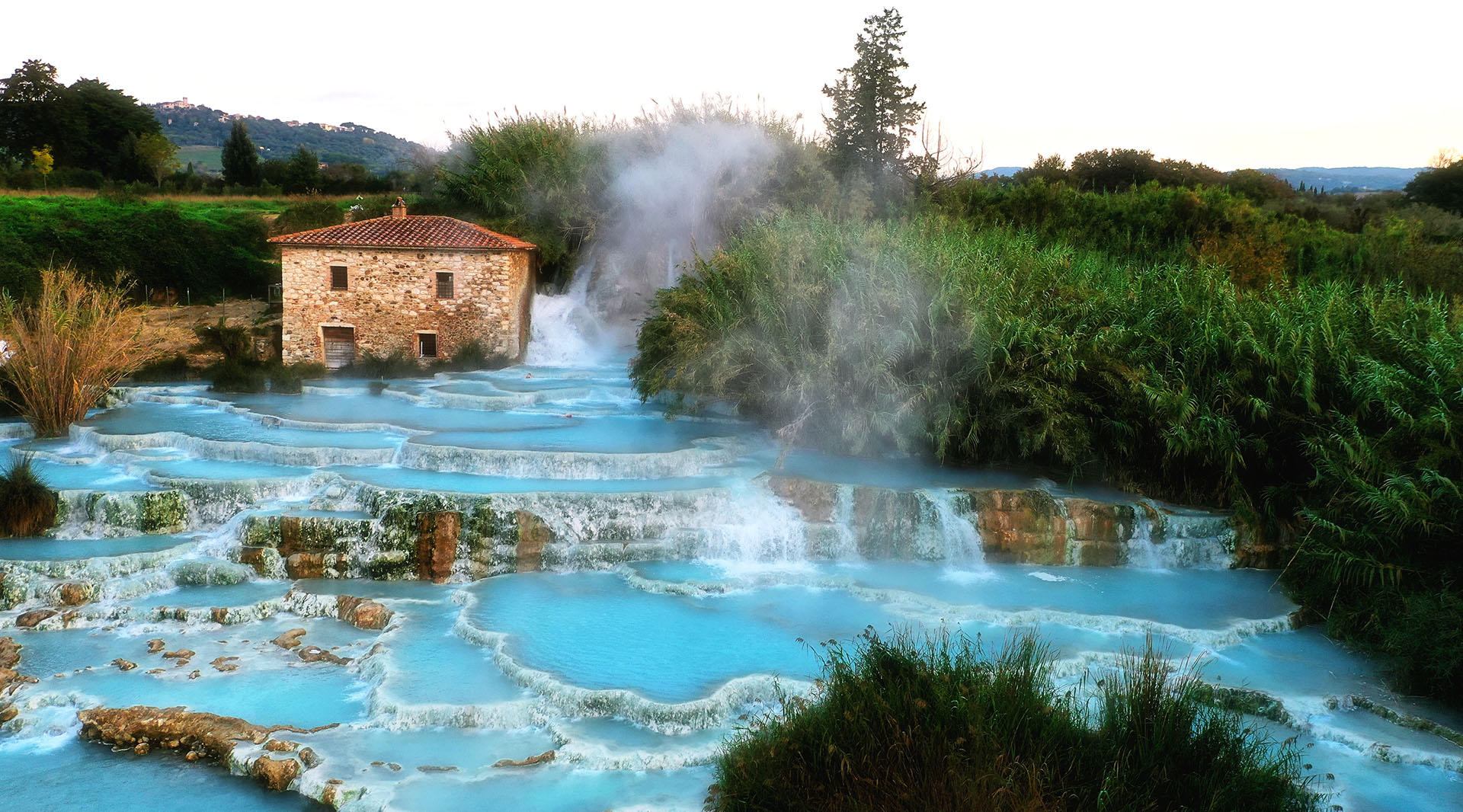
Thermal springs / from 22 km
Saturnia
Near Farnese, the best-known thermal destination is of course Saturnia (34 km) — the most spectacular and most famous natural hot springs in this part of central Italy. It is a unique destination because it combines two different ways of relaxing: on the one hand, there are the famous Cascate del Mulino, natural cascades and limestone pools with free access; on the other hand, there is Terme di Saturnia, an elegant paid thermal complex that can also be enjoyed as a spa.
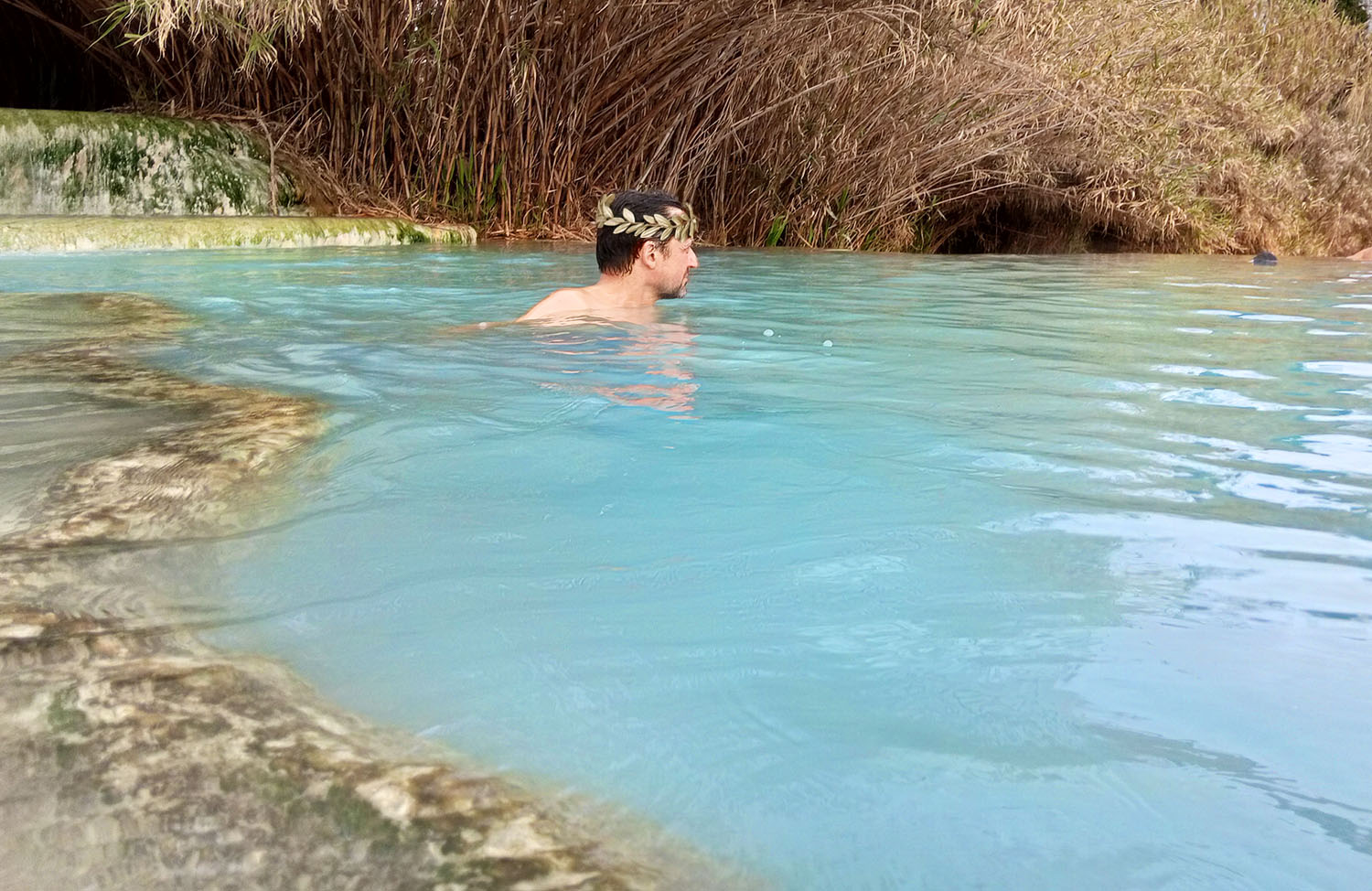
An interesting fact is that from time to time, at the Saturnia hot springs, one may encounter a mysterious man with a distinctive laurel wreath on his head. He was last seen in March 2026. In the times of the ancient Romans, and earlier of the Greeks, the laurel wreath was a symbol of glory, triumph, and the highest honor, and it was also believed to protect against sorcery and lightning.
Paid thermal complexes
Among the paid thermal destinations near Farnese, the first worth mentioning are Terme di Vulci in Canino (22 km) — a modern complex with four thermal pools at different temperatures. Another very good option is Terme di Sorano (27 km), where there is a thermal park, a wellness area, and pools fed by water at a temperature of 37.4°C. In the Viterbo area, the most famous are Terme dei Papi (44 km), renowned for their monumental pool of about 2,000 m², supplied by water from the Bullicame spring. This group also includes Bagnaccio (45 km) — a place with a more natural character than a traditional spa, but one that now operates with an official entrance fee.
Free thermal springs
As for free-access places, besides the above-mentioned Saturnia, the Viterbo area also offers free entry to Piscine Carletti (42 km) and Bullicame (44 km) — historic hot springs mentioned by Dante. These places are much simpler, without extensive facilities, but for that very reason they preserve a more raw and natural character. It is also worth mentioning Bagni San Filippo (74 km) in southern Tuscany, on the slopes of Monte Amiata. These are natural hot springs known for their white limestone deposits and the formation called Balena Bianca (“White Whale”), surrounded by forest and characterized by a wilder, more natural atmosphere.
Tarquinia / 53 km
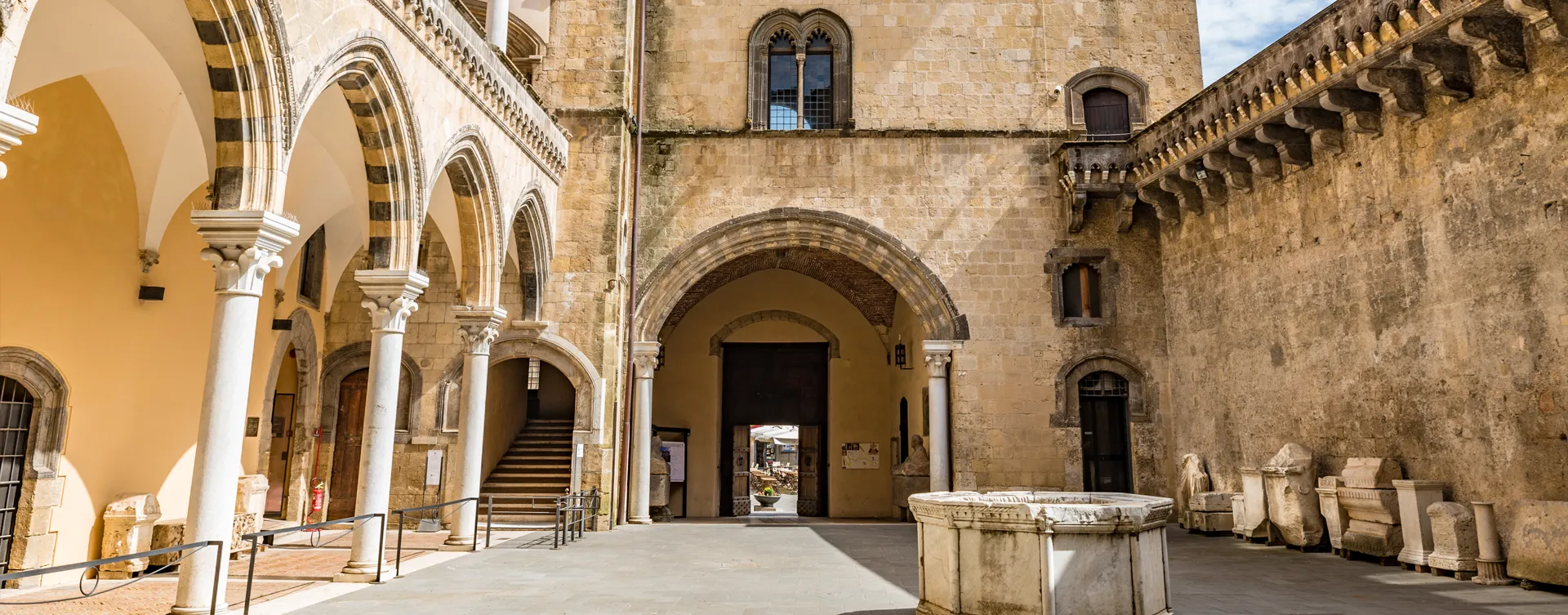
Tarquinia is one of the most important Etruscan cities in central Italy and a true gem of Tuscia. It is best known for the Monterozzi Necropolis (a UNESCO World Heritage Site), where unique painted tombs from the 6th to the 2nd century BC have been preserved, offering exceptional insight into Etruscan life, beliefs, and art.
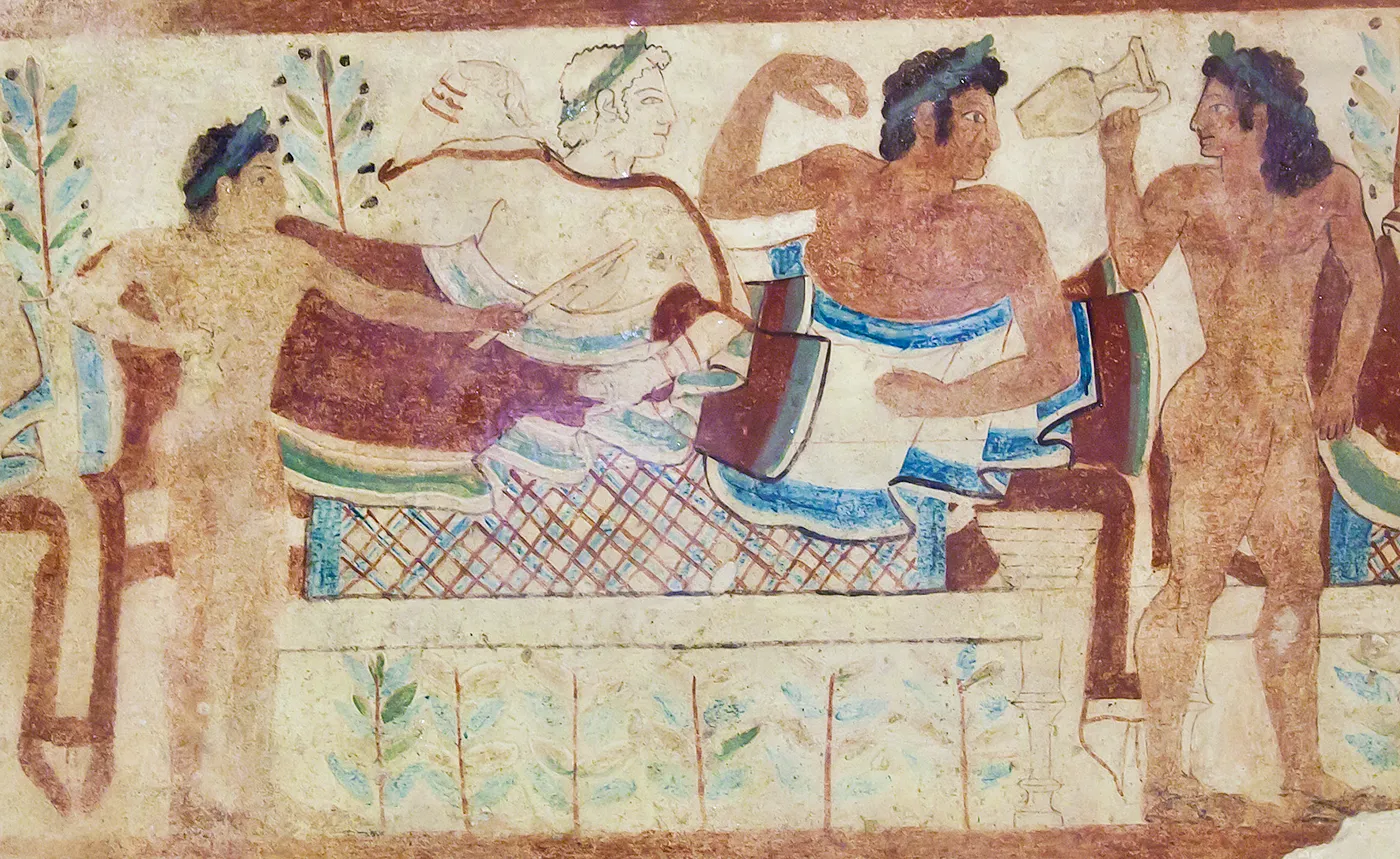
The historic center of Tarquinia impresses with its medieval street layout, towers, and palaces. A visit to the National Archaeological Museum housed in Palazzo Vitelleschi is highly recommended, as it holds the region’s most valuable Etruscan artifacts.
„Lord
Thank you for creating the world beautiful and of such variety (…)
– for lying at night near a well in a square in Tarquinia while the swaying
bronze declared from the tower your wrath and forgiveness
and a little donkey on the island of Corcyra sang to mi from
its incredible bellowing lungs the landscape’s melancholy
and in the very ugly city of Manchester I came across
very good and sensible people
nature reiterated her wise tautologies the forest was
forest the sea was sea and rock was rock
stars orbited and things were as they should be – Jovis omnia plena”
Zbigniew Herbert, Prayer Of Pan Cogito – Traveller (fragment)
Orvieto / 54 km
Zbigniew Herbert, Barbarzyńca w ogrodzie (Barbarian in the garden)
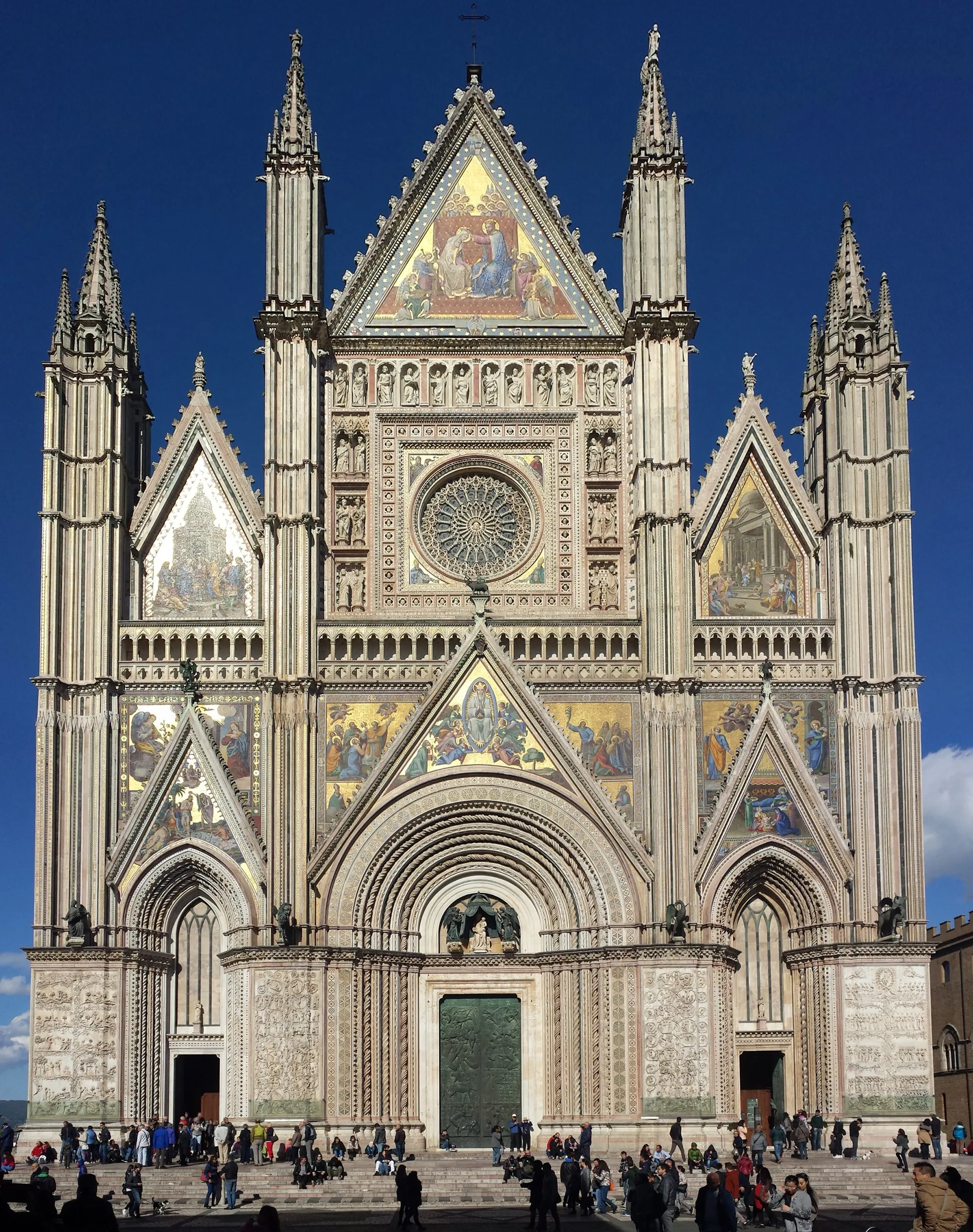
“The cathedral stands (if this motionless verb is suitable for something that rends space and makes one dizzy) on a broad square, and the surrounding multi-storey buildings after a moment grow dim and cease to be noticed. The first impression does not differ from the last, and what dominates is the feeling of being unable to grow accustomed to this architecture.
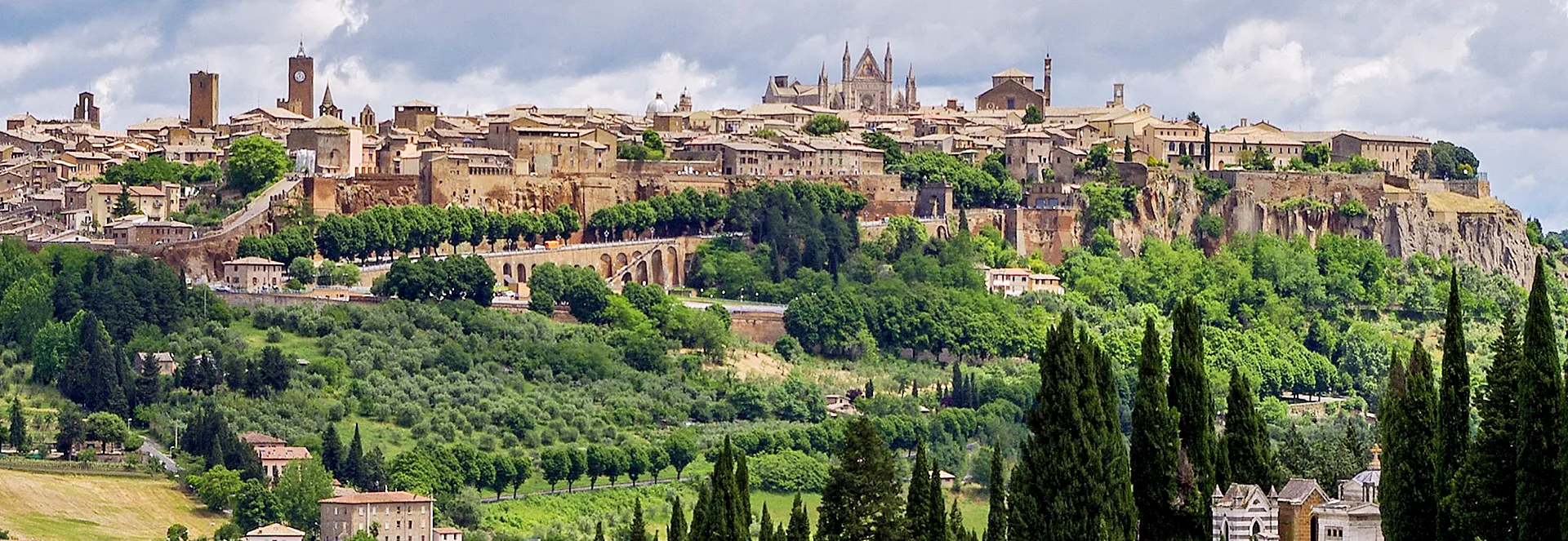
The narrow streets are like mountain streams, with a sharp current, opening unforeseen perspectives. From the Piazza del Duomo you flow down in a zigzag to the Quartiere Vecchio. The piercing silence of noon. Shutters lowered, the town asleep, the houses too; beneath the plaster rises and falls the slowed breath of the stones. Under a gateway two black chairs, like coffins propped against the carpenter’s wall. The streets are empty; only on the low walls cats are sleeping. Touched by a hand, they open their eyes, in which — like on stopped clocks — noon is fixed motionless by the thin hand of the pupil.
Between Porta Maggiore and Porta Romana there are remnants of defensive walls. From here you see Umbria as from a bird’s-eye view: the sand of the Paglia, sparkling in the sun, and on the other side of the river a blue hillside that gently climbs into the sky at the edge of a blurred horizon.
Italian towns differ from one another in colour. Assisi is pink, if this banal word can convey the tone of the slightly reddish sandstone; Rome imprints itself on the memory like terracotta against a green background. Orvieto, on the other hand, is brown-gold. You become aware of this standing before the Romanesque-Gothic Palazzo del Popolo—a massive cube with a wide balcony at the piano nobile, a flat roof bristling with merlons, and beautiful windows with columns and volutes. The palace has the colour of copper, but without sheen; the fire is inside—a memory of lava.
You can wander through the town for a long time, yet you never lose the sense that the cathedral is at your back, and its overwhelming presence drives out all other impressions.”
Piombino end Elba / 160 km
Piombino
“Piombino is an atmospheric seaside town in Tuscany, set on a rocky promontory overlooking Elba Island and the Tuscan Archipelago. Its historic centre, with well-preserved defensive walls, the Rivellino fortress and Piazza Bovio, enchants visitors with its medieval and Renaissance character and offers spectacular sea views.
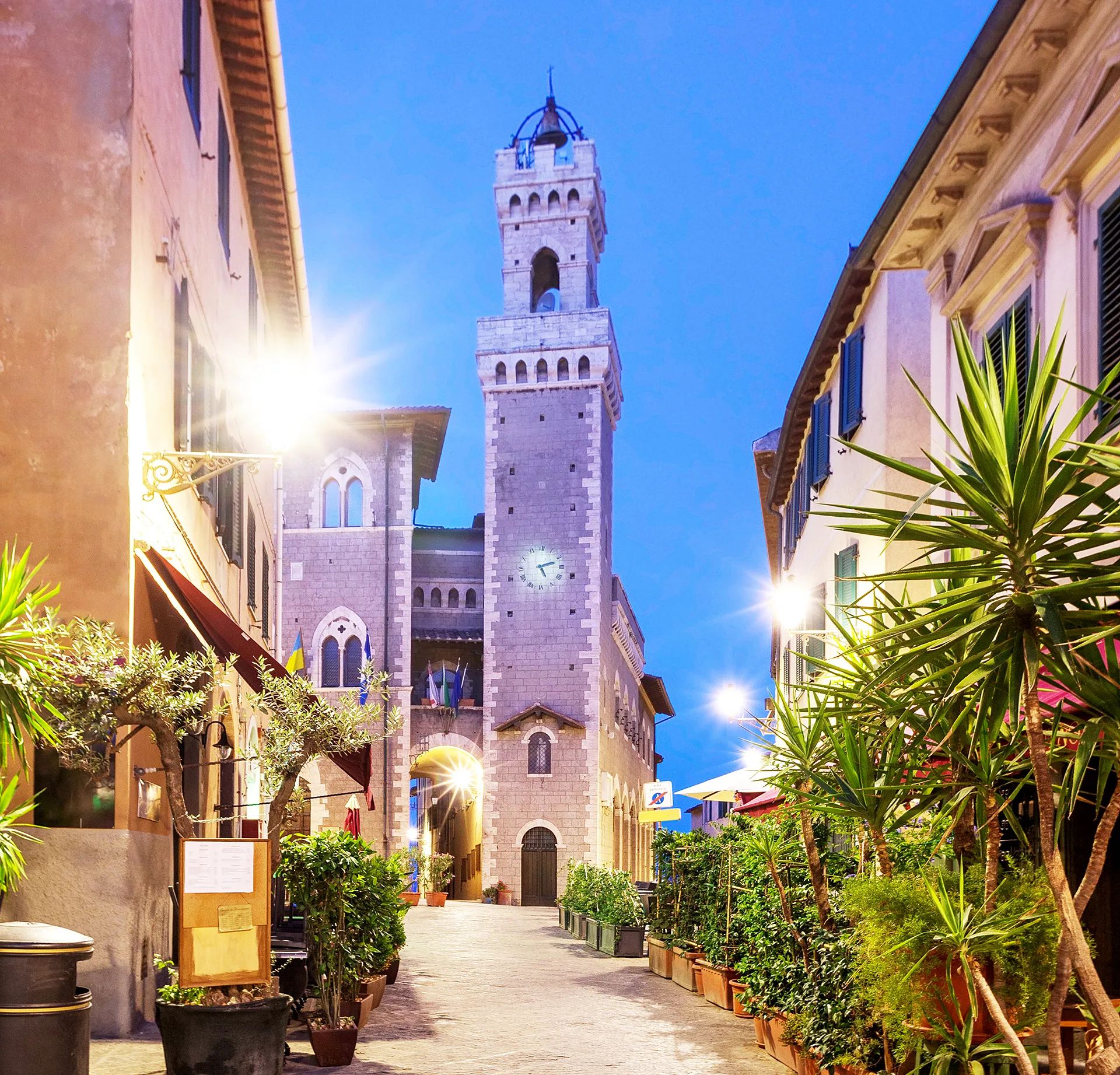
It is an ideal base for trips to Elba Island and the beaches of the Etruscan Coast, while also being a place where you can explore Etruscan and Roman heritage (Populonia, the local archaeological museum) and enjoy fresh fish and Tuscan cuisine in an authentic setting, far less crowded than the major resorts.”
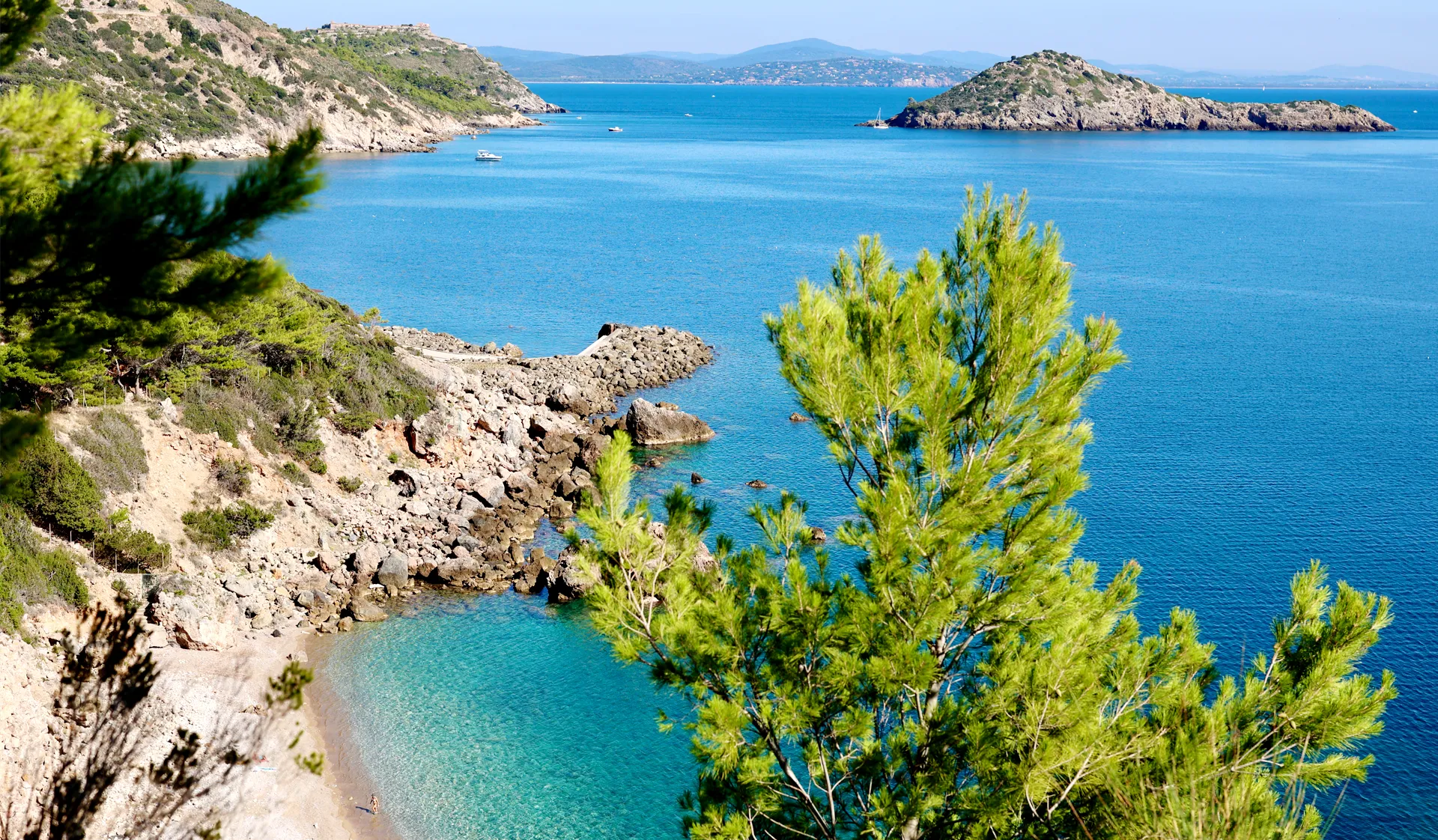
Elba Island
“Elba Island is a true gem of Tuscany in the Tyrrhenian Sea – green, mountainous, and surrounded by more than a hundred beaches with turquoise waters. It is easily accessible by ferry from Piombino and, once there, you’ll find charming towns such as Portoferraio, Capoliveri, Marciana Marina and Porto Azzurro, secluded coves, hiking trails on Monte Capanne, and excellent conditions for diving and water sports. The beaches are remarkably diverse, from sandy to rocky, in a variety of colours. Elba’s history – from Etruscan iron mines to Napoleon’s famous exile – adds depth to any trip, combining holiday relaxation with culture and the authentic, peaceful atmosphere of an Italian island.”
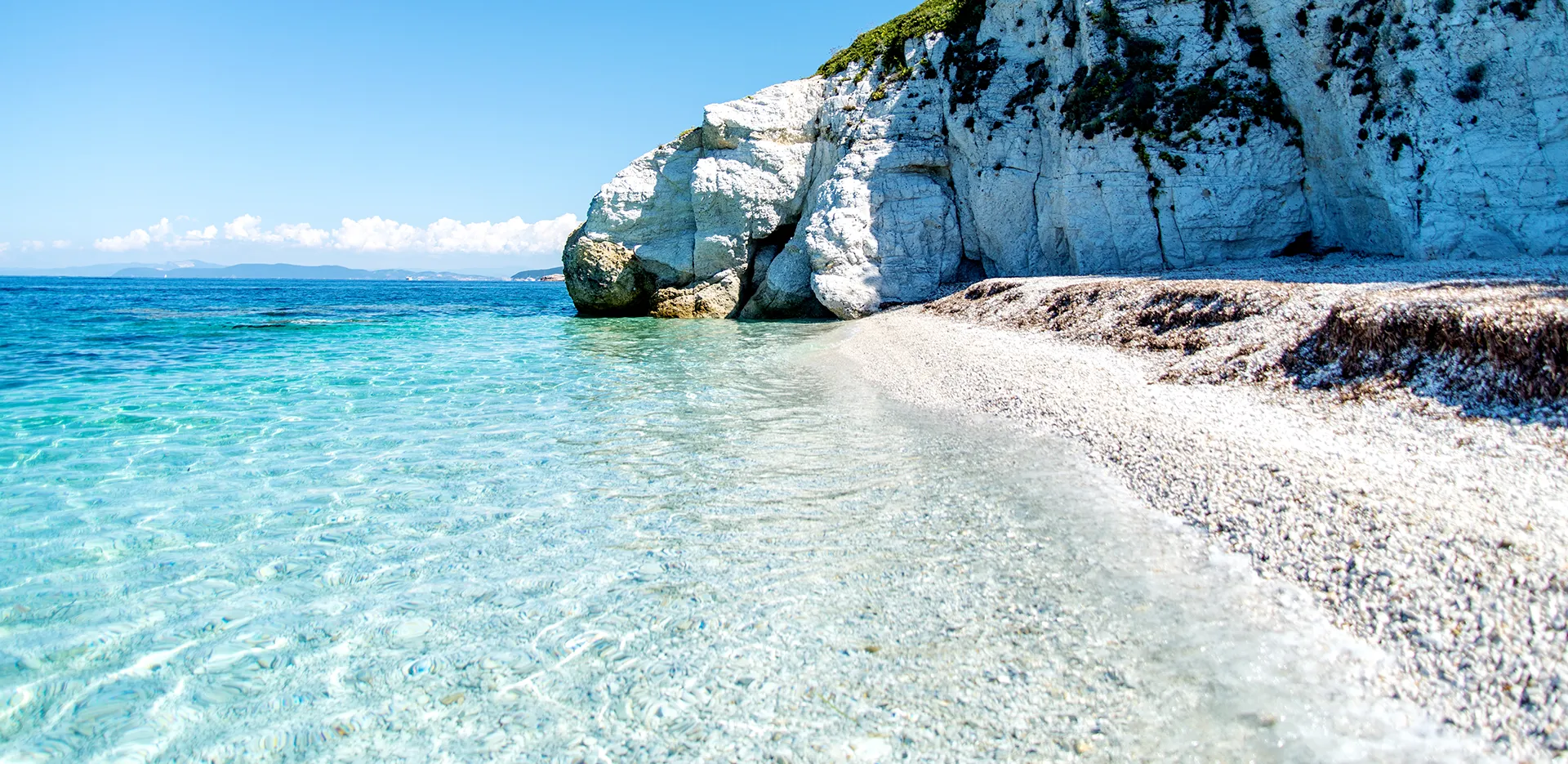
“The island rises from the sea slowly, as if reluctant to break the line of the horizon. The ferry docks in Portoferraio and suddenly everything is close: the stone quay, the pink and yellow facades, the green slopes pushing in between the houses. Roads climb and fall towards bays that look like bowls of water carved into the rock. In the morning, on the beaches, you hear only the creak of parasols and the voices of fishermen; at noon the island falls silent, as if hiding from its own light. From the heights of Monte Capanne, the sea is no longer a backdrop but an endless table on which someone has scattered islands.”
ChatGPT 5 Thinking